Why Is a Website Important for a Small Business?

Why a Website Is Important for a Small Business

By Adam

Why Is a Website Important for a Small Business?

Why Is a Website Important for a Small Business?

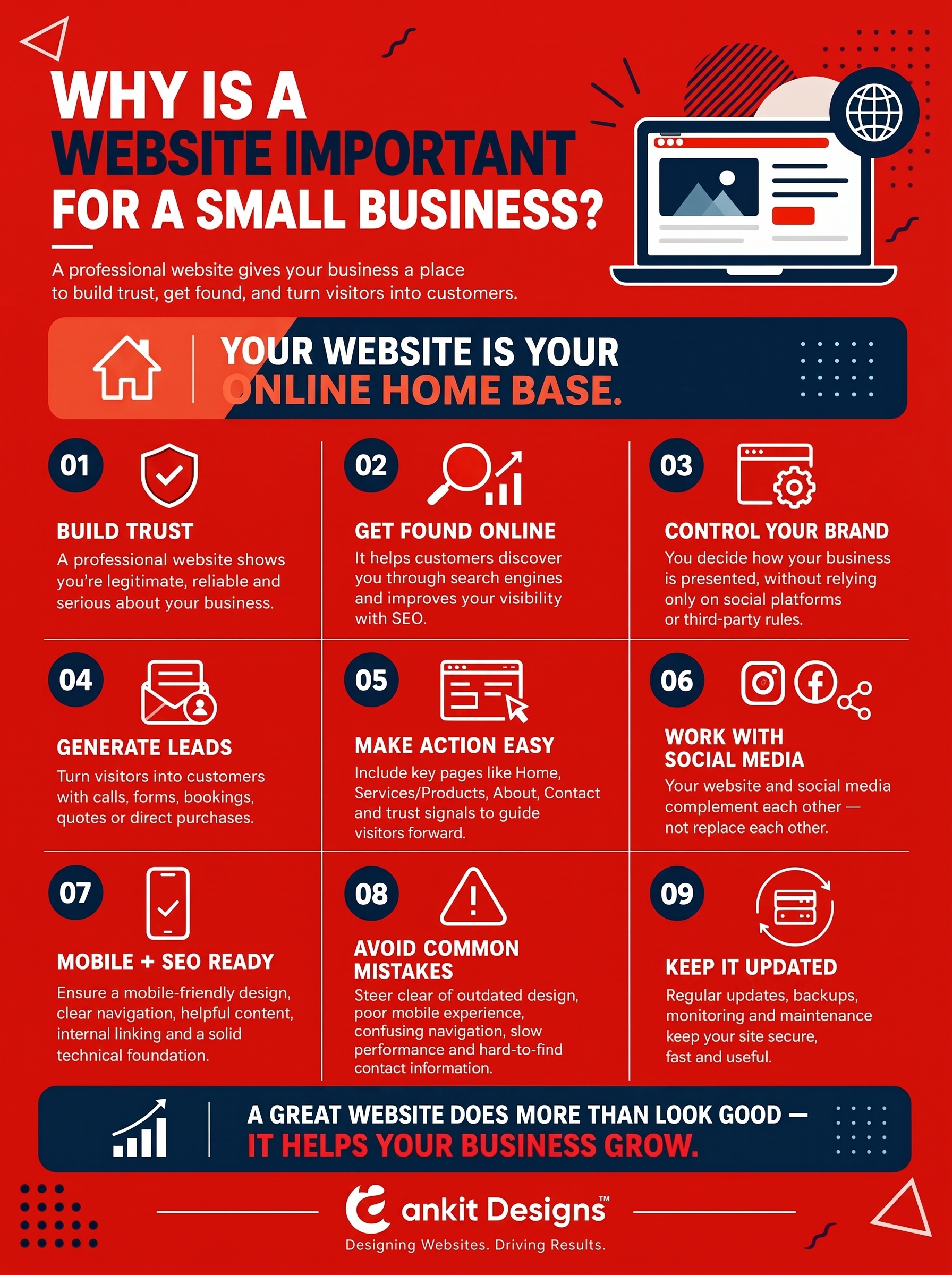
Why is a website important for a small business? For most companies, a professional website serves as the foundation of their online presence. It gives potential customers a place to learn about the business, understand its services, build trust, and decide whether they want to take the next step.

Social media, Google Business Profile, review platforms, and online directories can all help customers discover a company, but they do not offer the same level of control as your own website. A professional business website allows you to decide how your company is presented, what information visitors see, and how they interact with your brand.

A strong website can also support SEO, generate leads, strengthen your credibility, and make your other marketing efforts more effective. It does not need to be complicated. It simply needs to clearly communicate who you are, what you offer, and why potential customers should consider your business.

A Professional Website Helps Build Trust

One of the biggest benefits of having a website for a small business is credibility. When someone discovers your business for the first time, they may want to learn more before calling, booking, or making a purchase.

Your website gives them somewhere to do that research. Potential customers can learn about your services, read about your company, view previous work, find testimonials, and get answers to common questions. All of this can help reassure them that they are dealing with a professional business.

A website also gives you much more room to explain what makes your company different than a social media bio or directory listing. You can communicate your experience, approach, services, values, and overall brand in a way that feels consistent.

A professional website will not automatically turn every visitor into a customer, but an outdated, confusing, or incomplete site can make people question whether they should trust the business.

A Website Helps Customers Find Your Business Online

A website also gives your business more opportunities to appear in search results. Search engines need information to understand what a company does, the services it provides, and which searches its pages may be relevant to.

This is where professional website design and development and SEO work together. A properly structured website gives you space to create useful pages around your services, products, expertise, and the questions potential customers are searching for.

SEO is not simply about repeating keywords across a page. Useful content, clear site structure, internal linking, mobile usability, website performance, and search intent all matter. Your website provides the foundation needed to build that organic search presence over time.

Content can support that strategy as well. Blog posts, guides, and resources can answer questions potential customers have before they are ready to contact a business. Someone may discover your company through a useful article and later return when they need the service you provide.

The key is creating content that serves a purpose. Publishing generic articles simply to add more pages is unlikely to help. Strong content should answer real questions while supporting the broader goals of the business.

Your Website Gives You More Control

Social media can be extremely useful, but businesses do not own the platforms they use. Algorithms change, features are added or removed, and organic reach can fluctuate.

Your website gives you much greater control over your online presence. You decide how the business is presented, how the site is organized, which services receive attention, and what visitors are encouraged to do next.

That does not mean a business needs to choose between social media and a website. They usually work better together. Someone might first discover your company through Instagram, LinkedIn, an advertisement, a search engine, or a referral before visiting your website to learn more.

Your website becomes the central destination that supports these other marketing channels.

It is also available when your business is not. Potential customers may research companies at night, during their lunch break, or on the weekend. A useful website can provide service information, contact details, FAQs, pricing guidance, booking options, or quote request forms whenever someone needs them.

By the time that person contacts your business, they may already understand what you offer and whether your company is a good fit.

A Small Business Website Can Generate Leads

A professional website should do more than look attractive. It should help visitors take action.

For one business, that may mean generating phone calls. For another, the goal might be quote requests, contact forms, consultations, bookings, or online purchases. The website should be designed around whichever actions are most valuable to the company.

If quote requests are important, visitors should not have to search through several pages to find the form. If phone calls generate most of your business, your contact information should be easy to locate.

Good web design makes these steps obvious without overwhelming visitors with aggressive sales messaging. The goal is to understand what information someone needs before making a decision and remove unnecessary friction from the process.

This is also why design and branding matter. Your website is often one of the most complete representations of your company that a potential customer sees. The layout, colours, imagery, messaging, navigation, and overall experience all influence how people perceive the business.

Professional design does not need to mean complicated design. Clear messaging, consistent branding, straightforward navigation, responsive layouts, and strong calls to action are usually much more useful than unnecessary animations or features.

What Should a Small Business Website Include?

The right website structure depends on the business, its customers, and what the website needs to accomplish. A service company may only need several core pages, while an e-commerce business will generally require a much larger site.

Most small business websites should include a clear homepage, detailed service or product pages, an About page, contact information, and relevant trust signals such as testimonials or previous work. The website should also work properly across mobile devices and make important actions easy to find.

If organic search is part of the marketing strategy, SEO should also be considered when the website is structured and developed. That includes useful page content, logical internal linking, appropriate page titles, mobile usability, and a strong technical foundation.

The goal is not to create the largest website possible. Every important page should have a reason to exist and help customers move closer to making a decision.

Can Social Media Replace a Small Business Website?

For most businesses, social media works better alongside a website rather than as a complete replacement for one.

Social platforms are useful for sharing updates, reaching new audiences, promoting content, and interacting with followers. However, businesses still operate within the platform’s design, features, rules, and algorithms.

A website provides much more flexibility. You can create detailed service pages, FAQs, case studies, resources, landing pages, and contact options without being restricted by the format of a social platform.

Rather than thinking about a website versus social media, it is more useful to think about how they work together. Social media can introduce people to your business, while your website provides a more complete place for them to learn about the company and take action.

Common Small Business Website Mistakes

Simply having a website does not guarantee that it is helping the business. An outdated design, poor mobile experience, confusing navigation, slow performance, vague messaging, or difficult-to-find contact information can all make it harder for visitors to become customers.

Another common mistake is treating the website as something that never needs to change after launch. Businesses evolve. Services change, teams grow, branding gets updated, and customers develop new questions. The website should evolve alongside the company.

Technical maintenance matters as well, particularly for WordPress websites. Updates, backups, monitoring, and ongoing maintenance can help keep the site operating as intended.

Ankit Designs offers a CareKit WordPress Support Plan for businesses that want ongoing WordPress maintenance after their website has launched.


Why Choose Ankit Designs for Your Business Website?

Understanding why a website is important for a small business is only the first step. To create real value, the website needs to do more than look professional. It should help people find your business, understand what you offer, trust your brand, and take action.

That is where Ankit Designs comes in. Ankit Designs creates custom websites built around both the user experience and the goals of the business. Their work combines professional design, reliable development, responsive layouts, performance, conversion strategy, and SEO foundations to create websites that are built to perform.

The results matter. Ankit Designs has helped clients achieve tangible improvements including increased website traffic and conversions. Their websites are designed to create a stronger online presence, make services easier to understand, build customer confidence, and give visitors clear paths toward contacting, booking, requesting a quote, or making a purchase.

Rather than relying on cookie-cutter templates, Ankit Designs takes the time to understand the business, its audience, brand, goals, and customer journey. The process moves from planning and design through development, testing, launch, and support, helping ensure the finished website is not only visually polished but useful as a business and marketing tool.

Ankit Designs also builds SEO best practices into its websites from the start. This includes considerations such as website structure, mobile responsiveness, page speed, metadata, image optimization, and clean development. These foundations can help improve search visibility and create more opportunities to attract relevant organic traffic.

The relationship does not have to end when the website launches either. Through the CareKit WordPress Support Plan, businesses can receive ongoing updates, backups, monitoring, human checks, support, and reporting to help keep their WordPress website maintained over time.

The goal is straightforward: build a website that does more for the business. Whether that means creating a stronger first impression, attracting more traffic, improving conversions, generating more inquiries, or giving customers a better online experience, Ankit Designs builds websites with real business outcomes in mind.

Final Thoughts

So, why is a website important for a small business? Because potential customers need a dependable place to understand who you are, what you offer, and whether your business is right for them.

A professional website can help establish credibility, support SEO, generate leads, strengthen your brand, answer customer questions, and make your other marketing efforts more effective. It also gives your business greater control over how it is represented online.

You do not need the biggest or most complicated website. You need one that clearly represents your business, works properly for your customers, and supports the goals you are trying to accomplish.

If your current site is outdated, difficult to use, or no longer represents your business properly, contact Ankit Designs to discuss your website project.

FAQs

How can a website help a small business get more customers?

A website can help customers discover a business through search engines, understand its products or services, build trust, and take actions such as calling, submitting a form, booking an appointment, requesting a quote, or making a purchase.

Does a small business website need SEO?

If attracting customers through organic search is part of the marketing strategy, SEO should be considered when the website is built. Useful content, clear website structure, internal linking, mobile usability, and strong technical foundations can all support search visibility.

What pages should a small business website have?

The ideal structure depends on the business, but most websites benefit from a homepage, About page, service or product pages, a contact page, and relevant trust signals. Businesses using content marketing may also benefit from a blog or resources section.

How often should a business website be updated?

A website should be updated whenever important business information changes. Technical maintenance may also be necessary, particularly for WordPress websites. Ankit Designs explains this further in its guide to website maintenance for small businesses.

Ready to Build a Stronger Online Presence?

Your website should work as hard as you do.

If you’re considering a new website, redesign, or improvements to your existing online presence, contact Ankit Designs to discuss your business goals and find an approach that makes sense for you. Contact us to start the conversation.

Get in touch with our team today to schedule a consultation and discover how we can create a website tailored to your business goals.

About the author

I'm nobody's taxi service but I take pride in driving the bus! Upbeat, energetic serial entrepreneur on the quest to serve and help people. I enjoy long walks on short beaches and adventurous, adrenaline-pumping activities. I'm a normal bloke doing abnormal bloke things!
Read more posts by Adam
Phone Icon
Call Us
Contact Icon
Contact