How Web Design Affects SEO

Web designer optimizing a website layout for better SEO, usability, and mobile performance.

By Adam

How Web Design Affects SEO

How Web Design Affects SEO

Web design and SEO are sometimes treated like two completely separate jobs. One makes the website look good, while the other gets people to find it on Google.

In reality, they are much more connected.

You can publish excellent content and target valuable keywords, but if your website is slow, difficult to navigate, poorly structured, or frustrating on mobile, you are making it harder for that content to perform. On the other hand, a beautiful website can still struggle in search if important pages are buried, headings are poorly organized, or search engines have difficulty understanding the site.

Good web design creates the foundation SEO needs to work effectively.

At Ankit Designs, we believe a website should never be built around appearance alone. Design, development, performance, usability, and content structure all need to work together. When they do, you create a website that is easier for customers to use and better prepared to compete in search.

Arrested Development scene - I've made a huge mistake.

Does Web Design Really Affect SEO?

Yes, although not every design decision directly changes your Google ranking.

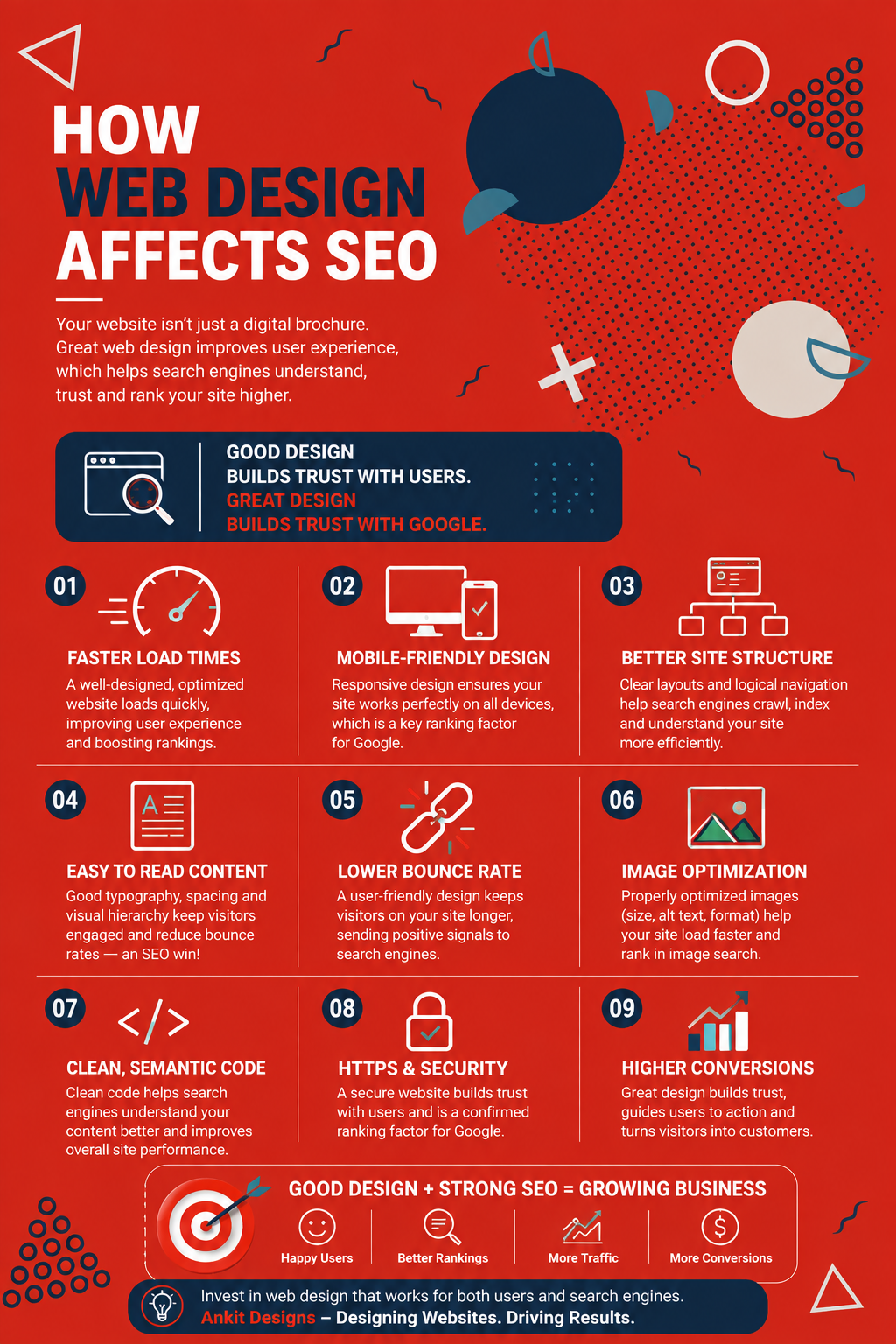
Web design affects many of the factors surrounding SEO, including page speed, mobile usability, site architecture, navigation, internal linking, content readability, image optimization, and how easily search engines can crawl important pages.

It also affects what happens after someone reaches your website.

SEO may earn the click, but the website still needs to convince that visitor to stay, explore, and take action. If someone lands on a page that loads slowly or is nearly impossible to use on their phone, getting them to your website through Google was only half the job.

That is why SEO-friendly web design is not about designing a website specifically for algorithms. It is about creating a strong technical and user-focused foundation that makes your content easier for both people and search engines to understand.

Website Speed Matters

Website speed is one of the clearest connections between web design, development, and SEO.

Large unoptimized images, bloated themes, excessive plugins, unnecessary animations, and poorly written code can all make a website slower. These choices may happen during the design and development process, but their impact continues long after the website launches.

Speed also affects the user experience. People do not want to wait several seconds every time they open a page. A slow website creates friction before visitors have even had the opportunity to read your content or understand your offer.

At Ankit Designs, our website design and development services place a strong emphasis on clean development and performance because the parts of a website users cannot see can still have a major impact on their experience.

A website should not have to choose between looking great and loading quickly. Good development should support both.

Mobile-Friendly Design Is Essential

Your website needs to work just as well on a phone as it does on a desktop.

Responsive web design allows layouts, text, navigation, images, and buttons to adjust to different screen sizes. Without it, visitors may have to zoom in to read text, struggle to tap buttons, or scroll sideways just to see the page properly.

Those are not small inconveniences. They can make an otherwise professional company look outdated and send potential customers straight back to the search results.

Mobile performance is also important because Google primarily uses the mobile version of a website when evaluating and indexing its content. That makes responsive design a core part of building an SEO-ready website rather than an optional feature added at the end.

Ankit Designs builds websites with responsive behaviour considered throughout the project. A page should feel intentionally designed for mobile, not like the desktop version was simply squeezed onto a smaller screen.

Site Structure Helps Search Engines Understand Your Website

A good website has a clear structure.

Imagine a company that provides ten different services but lists all of them briefly on one enormous page. Compare that with a site where each major service has its own useful page, related pages are logically grouped, and visitors can quickly understand how everything connects.

The second website is easier for customers to navigate, but it also gives search engines much more context.

Good site architecture creates logical relationships between your homepage, service pages, location pages, blogs, resources, and other important content. URLs, navigation, page hierarchy, and internal links can all reinforce those relationships.

This is why planning matters before the visual design begins. At Ankit Designs, understanding the business and its content requirements is part of the web design process. Building the right structure from the beginning is much easier than trying to reorganize a poorly planned website after hundreds of pages have already been created.

Navigation and Internal Linking Support SEO

Navigation is primarily a user-experience feature, but it can also support SEO.

Important pages should be easy to reach. If a valuable service page is hidden several layers deep with almost no internal links pointing toward it, both visitors and search engines may have a harder time discovering its importance.

Internal links help solve that problem.

For example, a blog about website maintenance might naturally link to a WordPress support service. A service page could link to a relevant case study. A main service page might direct visitors toward individual subservices.

These connections help visitors explore while also giving search engines more information about how pages relate to one another.

The key is making those links useful. Adding dozens of random links to every page does not create a better website. Internal linking works best when the next page genuinely makes sense for someone reading the current one.

Your Content Needs the Right Design

SEO depends heavily on content, but design affects how that content is presented.

A page could contain the perfect answer to a search query and still be difficult to use if it consists of one enormous block of text. Clear headings, appropriate spacing, readable typography, images, lists, and visual hierarchy all make information easier to consume.

Headings are particularly useful because they establish structure. A clear page title followed by logical sections and subsections helps visitors scan the page while also making the topic easier to understand.

Good design should support the content instead of competing with it.

This is one reason Ankit Designs plans websites around real content and business goals rather than designing attractive boxes first and figuring out what to put inside them afterward.

Images Can Help or Hurt Your SEO

Images can make a website more engaging, explain ideas visually, and strengthen the overall brand. They can also create performance problems when they are handled poorly.

Uploading enormous image files directly from a camera or stock photography website can slow pages down significantly. Using the wrong dimensions, loading unnecessary images, or failing to compress them adds more weight without adding more value.

Images should be appropriately sized and optimized for the way they are actually displayed.

Descriptive file names and alt text can also provide context for images while supporting accessibility. Alt text should describe the image where appropriate rather than being treated as another place to stuff keywords.

The goal is not to remove visuals for the sake of speed. It is to use them intelligently.

Infographic on the problem with hiring a web design agency

Avoid Designing Pages Around Keywords

SEO-friendly web design does not mean making every page look like it was built for a search engine.

Businesses sometimes become so focused on including keywords that usability suffers. Headings become repetitive, copy becomes awkward, and pages are created solely because someone wants another variation of the same phrase.

That approach can make the website worse for the people it is supposed to attract.

Strong SEO starts with understanding search intent and then building useful pages around what customers genuinely need. Keywords help clarify the topic, but they should not control every design and writing decision.

A service page should still feel persuasive. A blog should still be enjoyable to read. A landing page should still have a clear conversion path.

You are trying to rank in front of people, after all. Eventually, those people need to like what they find.

Redesigns Can Affect Existing SEO

Web design becomes especially important when redesigning a website that already receives organic traffic.

A redesign can improve SEO when it creates better performance, clearer architecture, stronger mobile usability, and more useful pages. But careless redesigns can also create problems.

Changing URLs without proper redirects, deleting valuable pages, removing internal links, drastically changing content, or accidentally preventing search engines from indexing sections of the site can cause existing rankings to decline.

This is why a redesign should involve more than recreating the visual appearance of the website.

The existing site needs to be reviewed before major changes are made. Valuable content and URLs should be identified, redirects planned where necessary, and the new structure carefully considered.

A modern design is not much of an upgrade if it wipes out years of search visibility in the process.

Landing Pages Need SEO and Conversion to Work Together

Sometimes a page has a very specific job.

A business might create a page around one service, advertising campaign, location, product, or offer. In those situations, good design needs to balance search relevance with conversion.

The page should answer the visitor’s questions and clearly establish the topic, but it also needs persuasive messaging, trust signals, strong visual hierarchy, and a clear call to action.

Ankit Designs creates dedicated landing pages for businesses that need focused experiences built around a particular campaign or conversion goal.

Ranking a page is valuable. Turning the people who reach it into customers is even better.

SEO Should Be Considered Before the Website Launches

One of the biggest mistakes businesses make is building an entire website and only thinking about SEO once everything is finished.

By that point, the site architecture, navigation, templates, headings, page structure, and technical foundation have already been decided. Problems that could have been prevented during planning may now require additional work to correct.

That does not mean an SEO specialist needs to dictate every design choice. It means search visibility should be one of the factors considered alongside branding, usability, functionality, content, and conversions.

When these priorities are considered together from the beginning, the result is usually stronger than trying to bolt SEO onto a finished website afterward.

Good Web Design Gives SEO a Better Foundation

So, how does web design affect SEO?

It affects the foundation your SEO strategy is built on.

Website speed, mobile responsiveness, site architecture, navigation, internal linking, content structure, image optimization, and technical development can all influence how effectively a website performs in search and how visitors behave once they arrive.

Great web design will not magically rank a website without valuable content, authority, and an SEO strategy. But great SEO is also harder when the website underneath it is poorly built.

The two should support each other.

At Ankit Designs, we have been designing and developing websites since 2010. Our approach combines thoughtful planning, custom design, responsive development, clean code, testing, and user experience to create websites that are built for more than launch day.

A website should look good. It should also be fast, easy to navigate, straightforward to manage, and ready to support the marketing you plan to invest in.

If your current website is making SEO harder than it needs to be, explore Ankit Designs’ website design and development services and see what it means to Build It Right.

Frequently Asked Questions

Does changing website design affect SEO?

It can. A redesign may improve SEO through better speed, mobile usability, site structure, and content organization. However, removing valuable pages, changing URLs without redirects, or creating technical problems can negatively affect existing rankings.

Is responsive web design important for SEO?

Yes. Responsive design improves the mobile experience and allows your website to adapt to different screen sizes. Mobile usability is an important part of creating a website that performs effectively in modern search.

Does website speed affect SEO?

Website performance can influence both search visibility and user experience. Slow pages create friction for visitors and can contribute to poor Core Web Vitals and overall page experience.

Can a beautiful website still have bad SEO?

Absolutely. A website can look excellent while having poor site architecture, slow performance, weak content, indexing problems, or almost no internal linking. Visual design is only one part of an effective website.

Should SEO be considered during web design?

Yes. Considering SEO during planning makes it easier to create logical site architecture, useful page templates, strong internal linking, mobile-friendly layouts, and a technical foundation that supports future search marketing.

Ready to Find the Right Web Design Partner?

Your website should be a powerful tool that helps your business attract customers and grow with confidence. At Ankit Designs, we combine strategic thinking, creative design, and technical expertise to build websites that deliver real results.

Get in touch with our team today to schedule a consultation and discover how we can create a website tailored to your business goals.

Follow us on our social media pages below:

If you want to work with Ankit Designs for your web design Toronto, reach out to us!

About the author

I'm nobody's taxi service but I take pride in driving the bus! Upbeat, energetic serial entrepreneur on the quest to serve and help people. I enjoy long walks on short beaches and adventurous, adrenaline-pumping activities. I'm a normal bloke doing abnormal bloke things!
Read more posts by Adam
Phone Icon
Call Us
Contact Icon
Contact