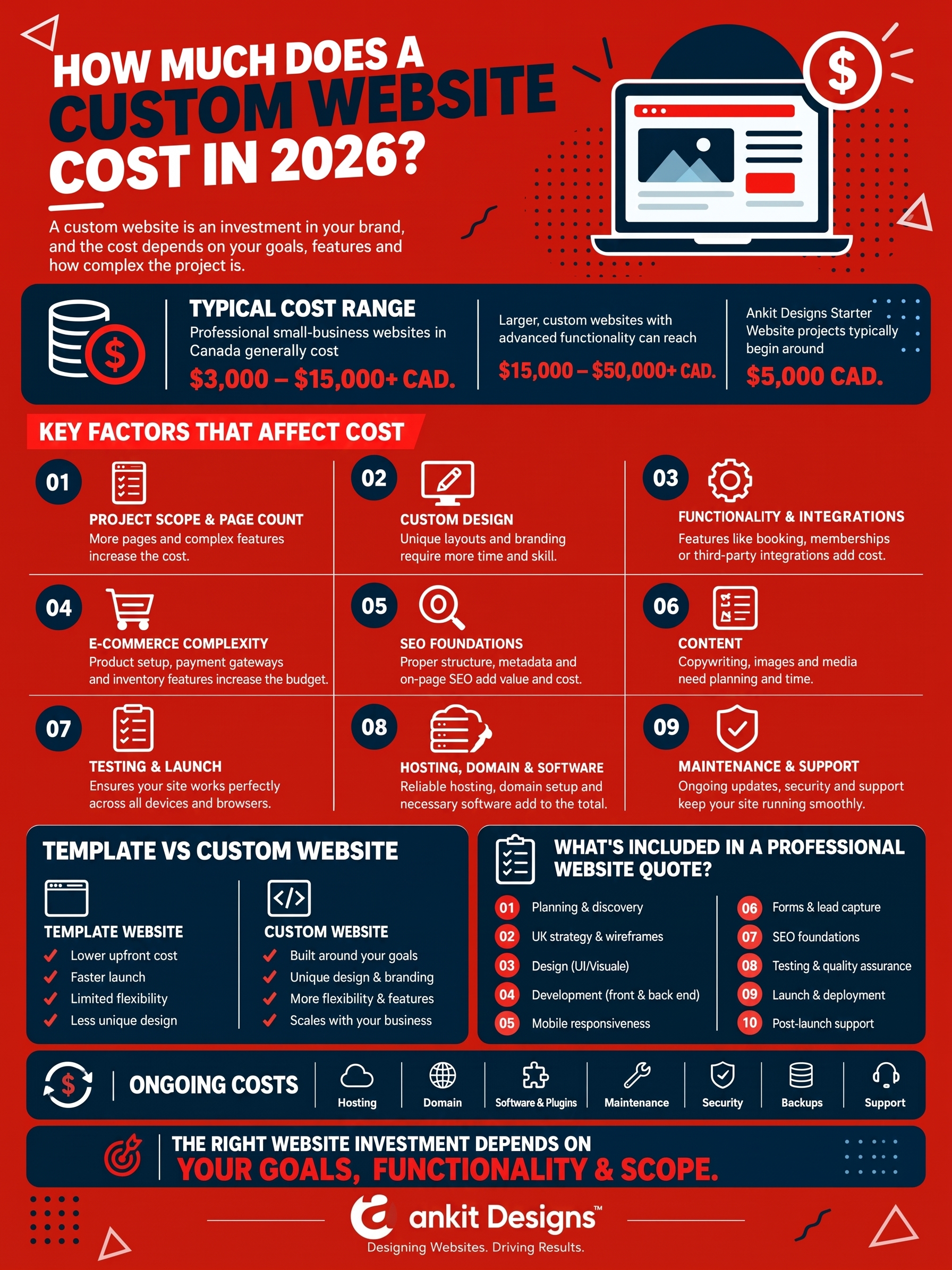
What Determines the Cost of a Custom Website?
The biggest factor affecting custom website pricing is project scope.
A five-page informational website with a contact form will generally cost less than a site containing dozens of unique pages, advanced forms, integrations, custom functionality, or e-commerce features. Page count matters, but the complexity of those pages often matters even more.
Design requirements can also significantly affect the investment. A website built around an existing template requires less design work than a fully customized experience created around a company’s brand, audience, and customer journey.
Functionality is another major factor. Features such as booking systems, client portals, memberships, calculators, user accounts, custom search tools, CRM integrations, and other interactive functionality require additional planning, development, and testing.
For e-commerce businesses, the scope can expand further. Product management, checkout functionality, payment processing, shipping, inventory, tax configuration, customer accounts, and integrations can all affect the amount of work involved.
This is why two companies can receive very different quotes even when both say they need a “new website.”
What Should Be Included in a Professional Website Quote?
When comparing custom website prices, the final number does not tell you very much unless you understand what is included.
A professional project may involve discovery and planning, user experience strategy, custom design, development, mobile responsiveness, content integration, forms, SEO foundations, testing, launch, and post-launch support.
Not every agency includes the same things.
One proposal may include strategy, design, development, testing, performance optimization, and SEO setup. Another quote that looks significantly cheaper may cover little more than assembling pages from an existing template.
That does not automatically make the lower-cost option bad. It simply means you are comparing different products.
A good website proposal should make the project scope clear. You should understand what is being designed and developed, how revisions work, what functionality is included, what you need to provide, and what happens after launch.
Custom Website vs. Template Website
A template website will usually cost less initially because much of the design structure already exists. For a new company with straightforward needs and a limited budget, that can sometimes be a practical option.
A custom website involves more work because the experience is being designed around the business rather than fitting the company into a predefined layout. That provides greater flexibility over branding, page structure, functionality, user experience, and conversion paths.
The right choice depends on what the website is expected to do.
If the website mainly needs to provide basic business information, an elaborate custom build may not be necessary. If it plays a major role in generating leads, supporting advertising, selling products, communicating an established brand, or handling important business functions, investing in a more tailored solution can make more sense.
The goal should not be to pay for complexity you do not need. It should be to invest in the level of website your business actually requires.