Why Professional Web Design Matters More Than Ever
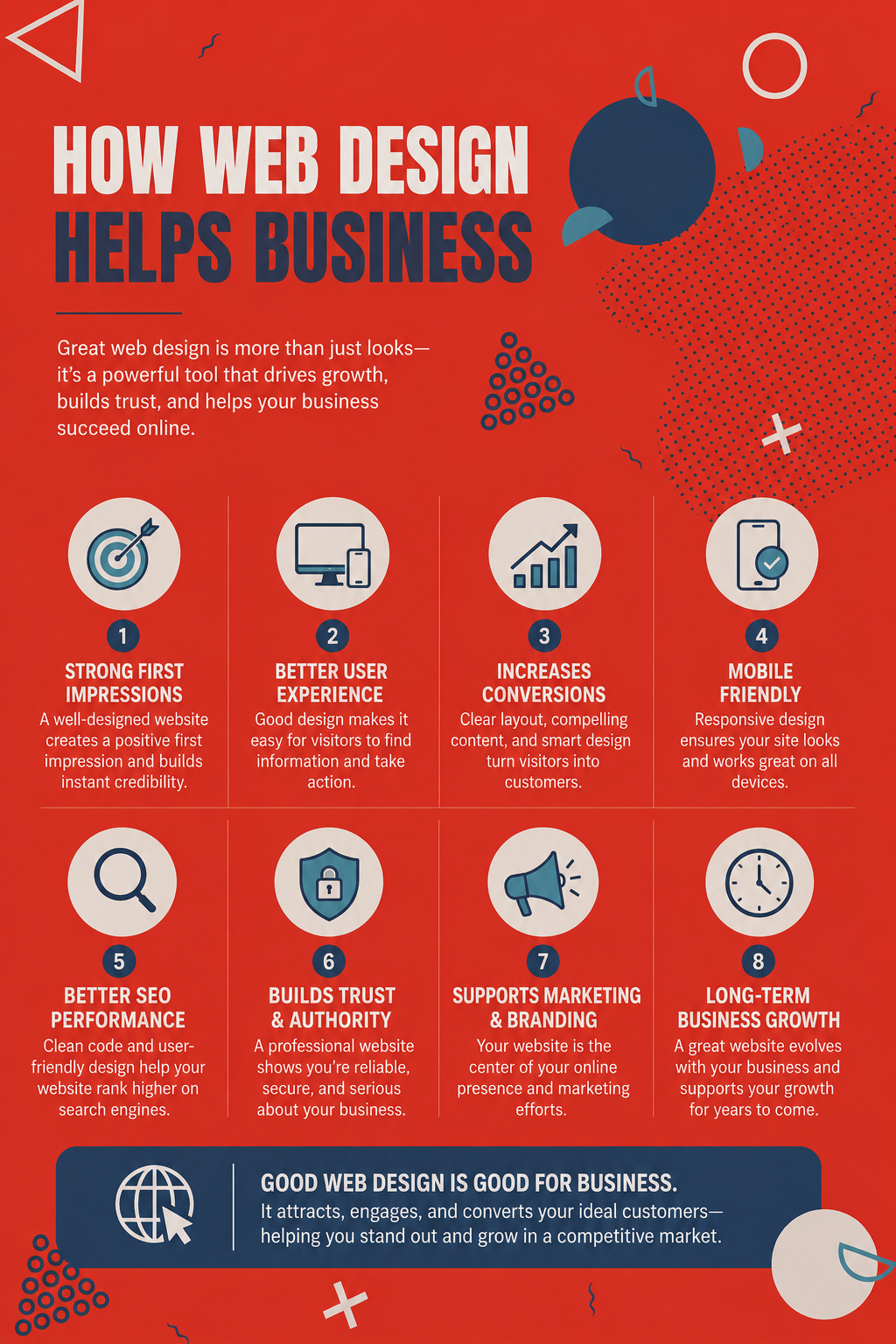
Technology continues to evolve, and customer expectations evolve with it. Customers expect websites to be fast, responsive, secure, and easy to use from the moment they arrive. If a website feels outdated or difficult to navigate, many people will leave before learning about the business.
Professional web design helps businesses meet these expectations while creating a positive experience that encourages visitors to stay longer and explore further.
Customers Judge Your Business Quickly
Research consistenly demonstrates that people form opinions about a website extremely quickly. Within a few seconds, they are already deciding whether the business feels trustworthy, professional, and worth their time. An outdated or poorly organized website can create doubt, while a polished one helps visitors feel more confident from the beginning.
Mobile Browsing Continues to Dominate
Most visitors now browse websites using smartphones or tablets.
A professionally designed website automatically adjusts to different screen sizes, ensuring every visitor enjoys the same smooth experience regardless of the device they’re using.
Responsive design is no longer optional. It is an essential part of modern web development.
Good Design Can Support SEO
Web design can support SEO by improving page speed, mobile usability, navigation, security, accessibility, and the way content is organized. These elements do not guarantee rankings on their own, but they make the website easier for both visitors and search engines to understand.
Professional web design supports each of these areas, improving both user satisfaction and search engine performance.
Strong Branding Creates Recognition
Your website should feel like a natural extension of your business. Consistent colours, typography, images, layouts, and messaging make your brand easier to recognize and give customers a clearer idea of who you are.
Better Accessibility Reaches More Customers
Accessibility helps more people use your website, including visitors with disabilities. Readable fonts, strong colour contrast, keyboard-friendly navigation, descriptive image text, and clearly labelled forms can make the experience better for everyone.