How to Choose a Nonprofit Web Design Partner in Toronto

By Adam
How to Choose a Nonprofit Web Design Partner in Toronto
Share
How to Choose a Nonprofit Web Design Partner in Toronto
A nonprofit website plays an important role in connecting an organization with the community it serves. Whether your goal is to raise donations, recruit volunteers, promote upcoming events, or share information about your programs, your website needs to make those actions easy for visitors.
However, creating an effective website requires more than an attractive design. It involves understanding your audience, choosing the right features, making information accessible, and ensuring the website remains functional over time.
For nonprofit organizations in Toronto, choosing the right web design partner can help make this process more manageable.
But how do you choose a nonprofit web design partner who understands your mission, budget, and long-term needs?
The key is to evaluate potential agencies based on their experience, design approach, technical capabilities, pricing, and ongoing support. This guide explains what Toronto nonprofits should consider before making a decision.

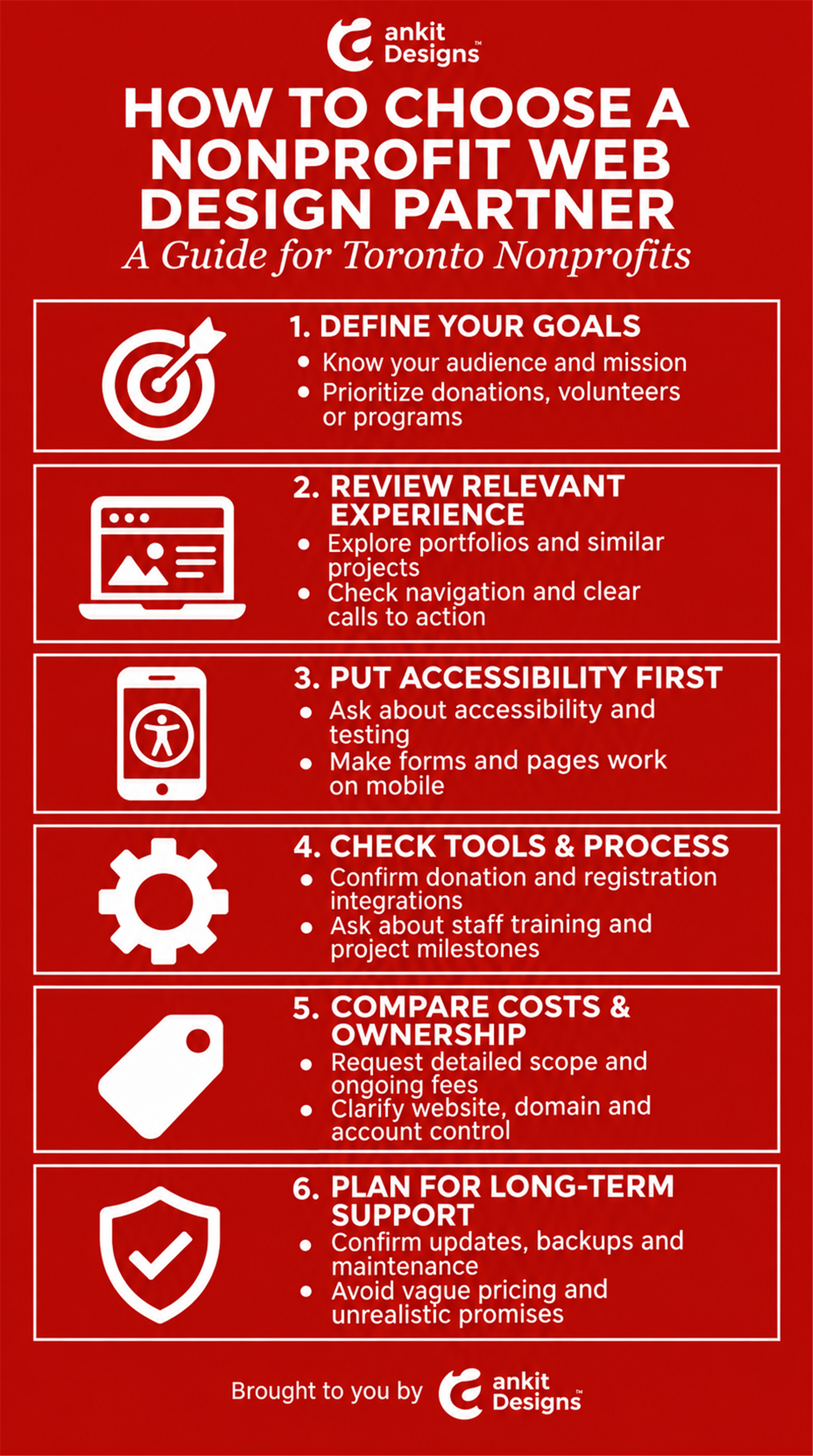
1. Identify Your Nonprofit's Website Goals
Before contacting a web design agency, it's important to understand what your organization wants to achieve with its website.
Not every nonprofit needs the same features or functionality. A Toronto food bank might need a website that displays program locations, operating hours, and volunteer opportunities. Meanwhile, an environmental charity may prioritize fundraising campaigns, educational resources, and event registration.
Knowing your goals will help you communicate your requirements and find an agency that can deliver the right solution.
Understand Your Target Audience
Think about the people who will use your website most frequently.
Your audience may include:
- Donors interested in supporting your organization
- Volunteers looking for opportunities to get involved
- Community members accessing programs or services
- Corporate sponsors and potential partners
- Staff members responsible for updating website content
Each audience has different needs.
For example, donors should be able to find information about your impact and access donation opportunities without unnecessary steps. Volunteers should be able to understand available opportunities and register their interest easily.
A good nonprofit web design partner should help organize your website around these different audiences.
Determine Your Website's Main Functions
Once you understand your audience, identify the features your website will need.
These might include online donation forms, volunteer applications, event calendars, program information, contact forms, or multilingual content.
Prioritize the features that support your organization's immediate goals before considering additional functionality.
This will help your web design partner develop an appropriate project scope while keeping your budget in mind.
2. Look for Relevant Nonprofit Web Design Experience
Experience is an important factor when choosing a nonprofit web design agency.
Nonprofit websites often have different priorities from traditional business websites. Instead of focusing primarily on selling products or services, they may need to communicate a mission, encourage community involvement, and make resources available to people who need them.
An agency should understand how these goals influence website design.
Review the Agency's Portfolio
Start by reviewing examples of websites the agency has previously designed.
Look beyond the visual appearance and consider how effectively each website communicates information.
Ask yourself:
- Is the navigation clear and easy to follow?
- Can visitors quickly understand what the organization does?
- Are important actions, such as donating or registering, easy to find?
- Does the website work well on mobile devices?
- Is the content organized in a way that makes sense?
These details can provide valuable insight into an agency's design capabilities.
Although previous nonprofit experience is beneficial, an agency with strong experience developing accessible, user-friendly websites for other organizations may also be suitable.
The important thing is whether the agency can demonstrate an understanding of your specific needs.
Ask About Similar Projects
During your initial consultation, ask whether the agency has worked on projects with requirements similar to yours.
For example, if your Toronto nonprofit relies heavily on volunteer registrations, an agency that has experience building registration systems may be particularly helpful.
You can also ask how the agency approached previous design challenges and what it learned from those projects.
These conversations can help you determine whether its experience aligns with your expectations.
3. Prioritize Website Accessibility and Mobile-Friendly Design
Accessibility is especially important for nonprofit organizations because their websites may serve people with a wide range of abilities, backgrounds, and technology needs.
Your website should make it easy for visitors to access important information, regardless of how they interact with it.
Consider Ontario's Accessibility Requirements
Toronto nonprofits should understand the website accessibility requirements that may apply to their organizations under the Accessibility for Ontarians with Disabilities Act (AODA).
Ontario's accessibility rules generally require designated public sector organizations and businesses or nonprofits with 50 or more employees to ensure applicable public websites meet WCAG 2.0 Level AA requirements, subject to certain exceptions.
Smaller nonprofits may not have the same website-specific obligations, but accessible design is still an important consideration.
When evaluating a nonprofit web design partner, ask how accessibility is incorporated into its design and development process.
Important accessibility features include:
- Sufficient colour contrast between text and backgrounds
- Descriptive alternative text for meaningful images
- Properly labelled forms and buttons
- Keyboard-friendly navigation
- Readable fonts and organized headings
- Compatibility with assistive technologies
For more information, organizations can review the Government of Ontario's website accessibility guidelines.
Make Mobile Usability a Priority
Your website should also function properly on smartphones and tablets.
Someone looking for a community program in Toronto may access your website while travelling or using a mobile device with a slower internet connection.
If the website is difficult to navigate or important information is hidden, visitors may struggle to complete their intended actions.
A professional web design partner should ensure that your website adjusts to different screen sizes and provides a consistent user experience.
This includes making donation forms, registration pages, navigation menus, and contact information easy to access on mobile devices.
4. Evaluate the Agency's Technical Capabilities
An effective nonprofit website needs the right technical foundation to support its purpose.
Before choosing a partner, make sure the agency can develop the features your organization requires.
Donation and Registration Integrations
Many nonprofit organizations depend on online donations, fundraising campaigns, and volunteer registrations.
If these functions are important to your organization, discuss them with potential web design partners early in the process.
Ask whether the agency can integrate the donation platform or registration software you currently use.
You should also confirm whether integration setup, testing, and any third-party subscriptions are included in the project quote.
A well-designed website should make it straightforward for supporters to take action without creating unnecessary complications.
Content Management Systems
Your staff may need to update website content regularly.
For example, a Toronto community organization might frequently add new events, update service schedules, or publish announcements.
A content management system (CMS) allows authorized staff to manage website information without needing to rebuild pages.
WordPress is a commonly used option for organizations that want flexibility in managing their content.
Ankit Designs offers professional website design and development services, including WordPress development.
When comparing agencies, ask whether the proposed platform will be easy for your team to use and whether staff training is included.
Your organization should be able to manage routine updates without depending on a developer for every small change.
5. Understand the Website Design and Development Process
A reliable nonprofit web design partner should have a clear process for completing projects.
Understanding that process before signing an agreement can help avoid confusion, unnecessary delays, and unexpected costs.
Ask About the Project Timeline
A typical website development project may involve several stages:
- Discovery: Understanding the organization's goals, audience, and website requirements.
- Planning: Developing the website structure, navigation, and content requirements.
- Design: Creating the website's visual layout and reviewing design concepts.
- Development: Building the website and implementing its required features.
- Testing: Checking functionality, accessibility, and mobile usability.
- Launch: Making the approved website publicly available.
- Post-launch support: Addressing technical issues and ongoing maintenance needs.
Ask the agency to explain its expected timeline and identify when your team will need to provide feedback or approve deliverables.
For Toronto nonprofits with multiple stakeholders, including board members and program managers, clear approval stages can be particularly valuable.
Look for Clear Communication
Communication is just as important as technical expertise.
An agency should be able to explain its recommendations in language your team understands.
Before hiring, clarify who will manage your project, how frequently updates will be provided, and how feedback will be handled.
You should also understand the agency's revision policy.
If your organization requests changes halfway through development, will those changes be included in the original scope or require an additional fee?
Establishing these expectations early can make the entire project easier to manage.
6. Compare Pricing and Long-Term Website Costs
Budget is often a major consideration for nonprofit organizations.
However, choosing the cheapest web design proposal isn't always the best decision.
A lower initial price might exclude important services such as content migration, staff training, accessibility testing, or ongoing maintenance.
Before making a decision, compare what each agency includes in its proposal.
Request a Detailed Website Proposal
A professional website design proposal should clearly explain the project deliverables and associated costs.
Look for information about:
- Website design and development
- Number of pages included
- Content creation and migration
- Donation and registration features
- Mobile responsiveness and accessibility
- Revisions and feedback rounds
- Website hosting and domain management
- Training and post-launch support
If any services are unclear, ask for clarification before signing an agreement.
This will help you compare proposals fairly and understand the total investment required.
Clarify Website Ownership
Website ownership is another important consideration.
Your organization should understand who controls the website, domain name, hosting account, design assets, and administrative access after launch.
For example, if your nonprofit decides to work with another agency in the future, will you be able to transfer your website and access its content?
Ask potential partners to explain these arrangements clearly and document them in the contract.
Maintaining control over your digital assets can provide greater flexibility as your organization grows.
7. Consider Ongoing Website Maintenance and Support
Launching a website is only the beginning.
Over time, websites require maintenance to remain secure, functional, and compatible with software updates.
For nonprofits, technical problems can interfere with important activities such as accepting donations, receiving volunteer applications, and sharing program information.
That's why ongoing support should be part of your decision-making process.
What Should Website Maintenance Include?
Depending on your website's platform and requirements, maintenance may involve:
- Updating website software and plugins
- Monitoring website security
- Creating and checking backups
- Identifying performance issues
- Troubleshooting broken functionality
- Testing important forms and website features
- Resolving technical problems
Before hiring a web design agency, ask whether these services are included after launch or offered through a separate maintenance plan.
Ankit Designs provides CareKit WordPress support and maintenance services for organizations seeking ongoing website assistance.
Understanding the available support options can help your nonprofit plan for its website's long-term needs.
8. Questions to Ask a Nonprofit Web Design Partner Before Hiring
Once you've identified a few potential agencies, arrange a consultation to discuss your project.
This is an opportunity to evaluate the agency's experience, communication, and understanding of your organization.
Here are ten important questions to ask:
- Have you worked with nonprofit organizations before? Relevant experience can help an agency understand the challenges associated with nonprofit websites.
- How will you learn about our organization's goals? A good partner should take time to understand your mission and target audience.
- Can you show examples of similar projects? Reviewing previous work helps evaluate design quality and functionality.
- How do you approach website accessibility? Ask how accessibility is considered throughout design, development, and testing.
- Can you integrate our existing donation or registration tools? Confirm compatibility with the platforms your organization uses.
- Will our staff be able to update the website? Discuss content management systems and training.
- What is included in the project price? Request a clear breakdown of services and potential additional costs.
- How long will the project take? Understand the development timeline and approval process.
- Who owns the website after launch? Clarify ownership of the website, content, and associated accounts.
- What maintenance and support do you provide? Understand what happens if technical issues arise after launch.
The answers to these questions can help you compare agencies and make a more informed decision.
9. Watch for Common Web Design Agency Red Flags
Not every web design agency will be the right fit for your nonprofit.
Recognizing potential warning signs can help you avoid problems later in the project.
Be cautious of agencies that:
- Provide quotes without asking about your organization's goals
- Cannot clearly explain their development process
- Make unrealistic promises about donations, traffic, or search rankings
- Offer vague pricing without explaining what is included
- Avoid discussing website ownership
- Have no clear accessibility or testing process
- Cannot explain their post-launch support options
These issues don't always mean an agency is unsuitable, but they should encourage you to ask more questions.
A trustworthy web design partner should be transparent about its capabilities, limitations, pricing, and responsibilities.
If an agency cannot provide clear answers, consider comparing additional providers before making a commitment.
10. Choose a Web Design Partner Who Understands Your Mission
Toronto is home to nonprofit organizations serving many different communities, including charities, educational programs, cultural associations, and social service providers.
While these organizations may share a commitment to helping others, their website requirements can vary significantly.
A nonprofit serving newcomers may prioritize accessible information and multilingual resources. A charity organizing community fundraising events may require donation functionality and event registration.
The right web design partner should recognize these differences and develop an approach that reflects your organization's needs.
When comparing potential agencies, look beyond the initial price.
Consider their experience, communication, accessibility practices, development process, and ability to provide ongoing support.
Most importantly, choose a partner who takes the time to understand what your nonprofit wants to accomplish.
A successful website should not only represent your organization professionally but also make it easier for people to connect with your mission.
Frequently Asked Questions
How Do I Choose the Best Web Design Agency for My Nonprofit?
Start by defining your nonprofit's goals, audience, website requirements, and budget. Then compare agencies based on their experience, portfolios, accessibility practices, technical capabilities, pricing, and ongoing support. Ask questions during consultations and request detailed proposals before making a decision.
What Should a Nonprofit Website Design Proposal Include?
A nonprofit website design proposal should outline the project scope, deliverables, timeline, development platform, pricing, revision policy, accessibility considerations, and ongoing support arrangements. It should also explain any additional costs for hosting, integrations, or maintenance.
Should a Toronto Nonprofit Hire a Local Web Design Agency?
Hiring a Toronto web design agency may offer convenient communication and opportunities for in-person collaboration. However, location shouldn't be the only deciding factor. Prioritize an agency that understands your organization's goals, has relevant experience, and offers a development process that works for your team.
How Long Does It Take to Design a Nonprofit Website?
The timeline depends on the website's size, complexity, required integrations, and the speed of content approvals. A smaller informational website may take less time than a large nonprofit website with custom donation systems, event registration, and extensive content. Ask potential agencies for a project-specific timeline.
What Features Should a Nonprofit Website Have?
Important features may include clear navigation, accessible content, mobile-friendly design, contact information, program pages, and opportunities for visitors to get involved. Depending on the organization, donation forms, volunteer registration, event calendars, and multilingual resources may also be useful.
Work With Ankit Designs on Your Nonprofit Website
Your nonprofit's website should help people understand your mission, access your services, and find opportunities to support your work.
Choosing the right web design partner is an important step toward creating a website that serves both your organization and its community.
At Ankit Designs, we provide professional web design, WordPress development, and ongoing website support services for organizations looking to strengthen their online presence.
Whether your Toronto nonprofit is building a new website or improving an existing one, our team can help you explore a solution that aligns with your goals.
Contact Ankit Designs to discuss your website project and take the next step toward building an effective online presence.
Get in touch with our team today to schedule a consultation and discover how we can create a website tailored to your business goals.
Share
About the author:
I'm nobody's taxi service but I take pride in driving the bus! Upbeat, energetic serial entrepreneur on the quest to serve and help people. I enjoy long walks on short beaches and adventurous, adrenaline-pumping activities. I'm a normal bloke doing abnormal bloke things!
